Design your applications.Control your infrastructure.
For platform and operations teams that run their own Linux servers. Draw an application once; Apelora Fabric sets up its network rules and addresses, runs it on your servers and handles failures.
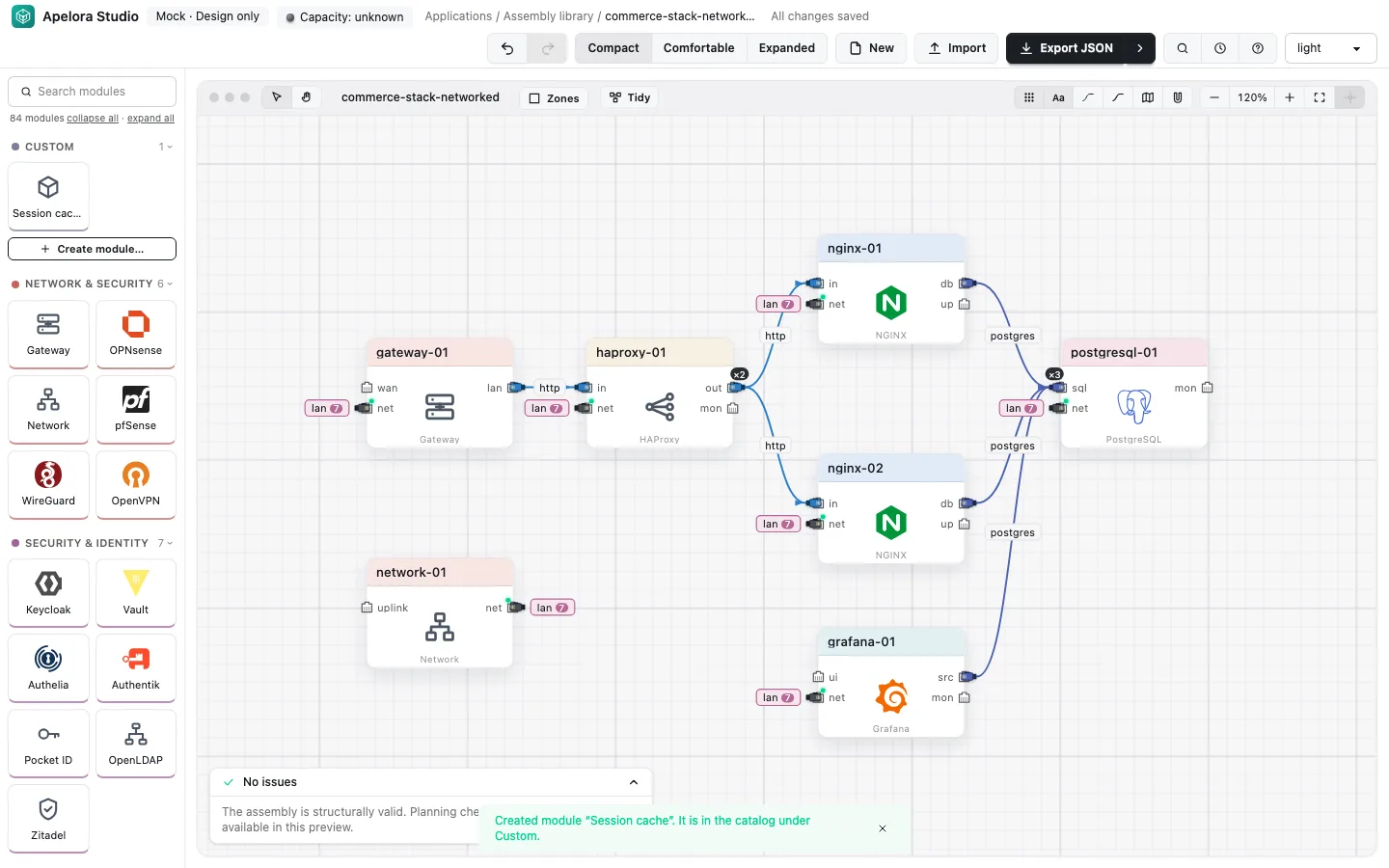
Apelora Studio, the designer. Sample data: the badge at the top reads "Mock · Design only", so nothing is deployed from this view.
Fabric Console
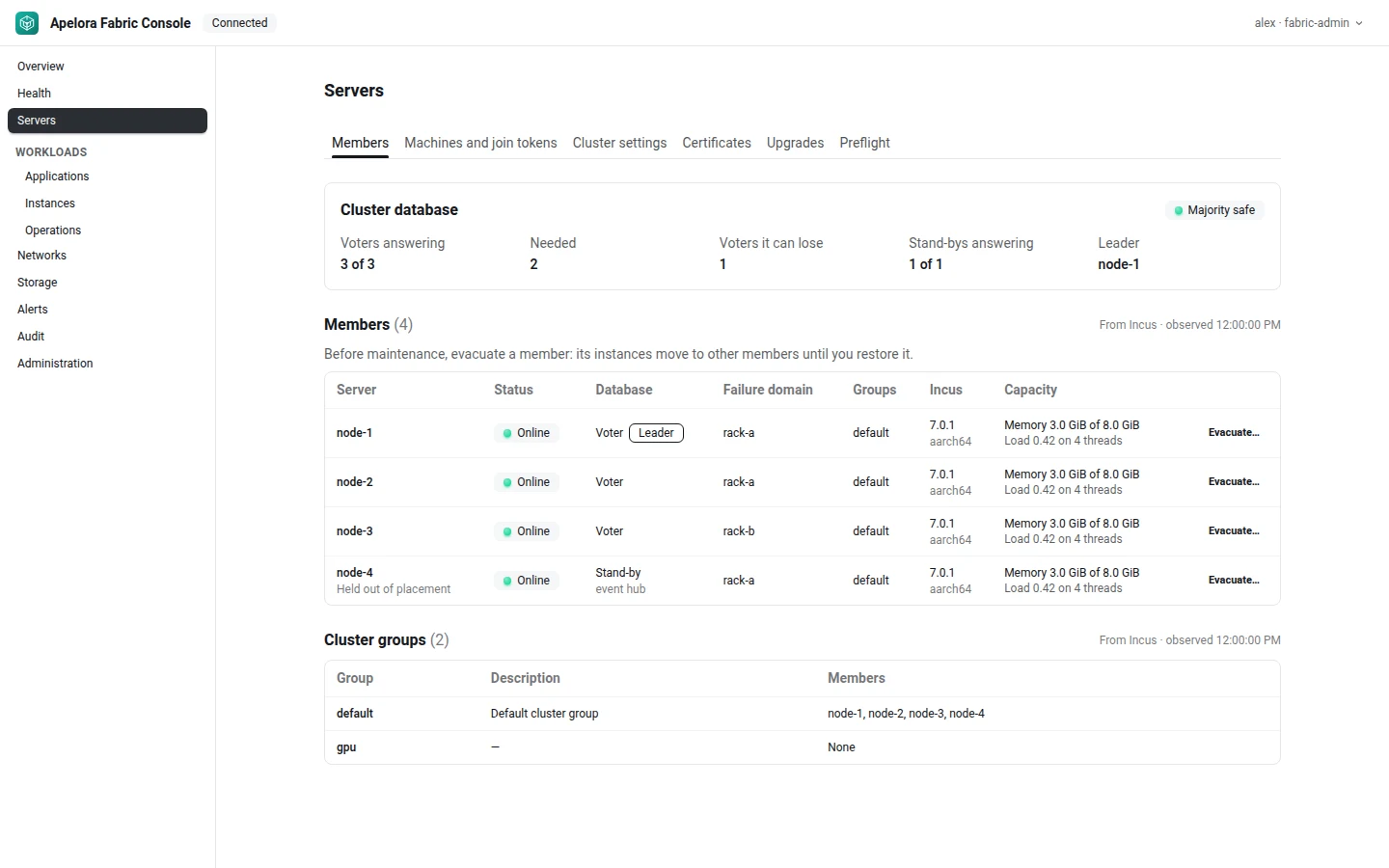
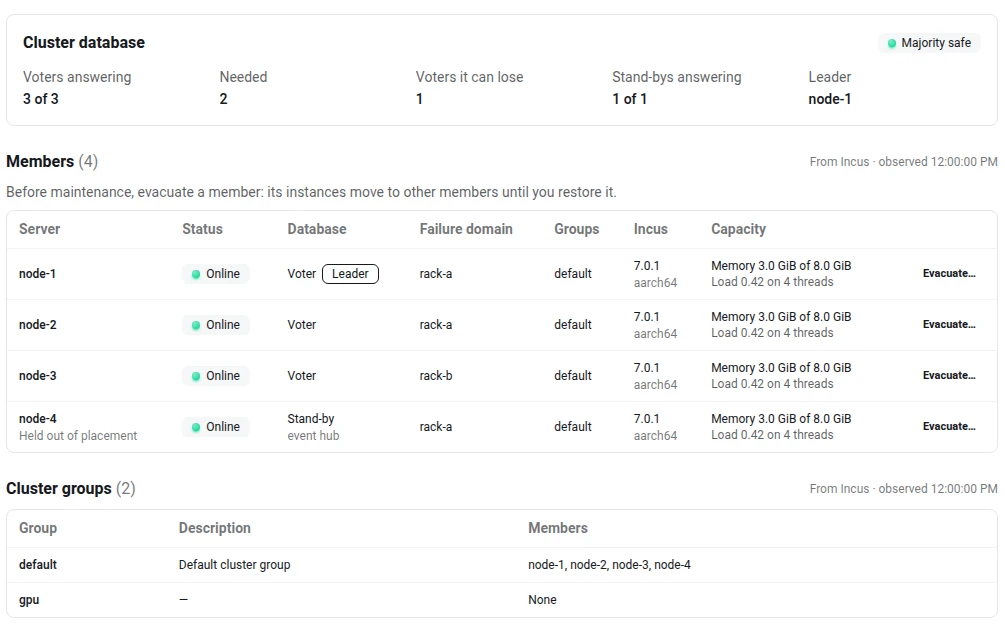
Fabric Console, the administrator's view. Sample data from a four-server lab.
Fabric Console
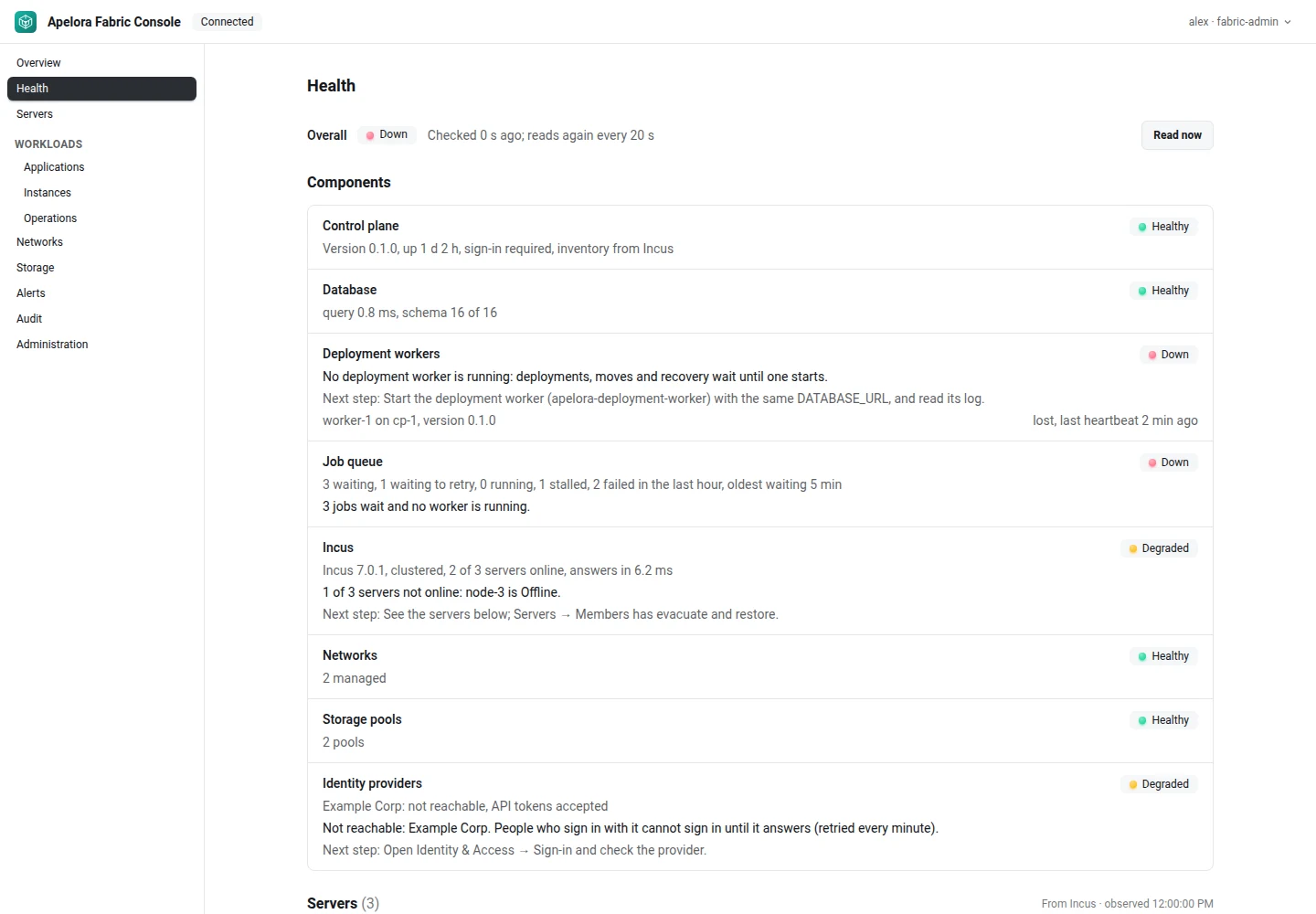
Fabric Console, Health, during a simulated failure. Every problem says what is wrong and what to do next. Sample data.
143modules to design with, in 9 categories. Seven deploy today.
4servers in the lab it has been tested on, running Incus 7.0 LTS.
16built-in alert rules, with signed webhooks.
190+API operations, from one documented OpenAPI file.
AGPLopen source. No tracking, no cookies on this site.
From the drawing to the audit log.
Two screens and one control plane. Each result says how it was checked.
Design with guardrails
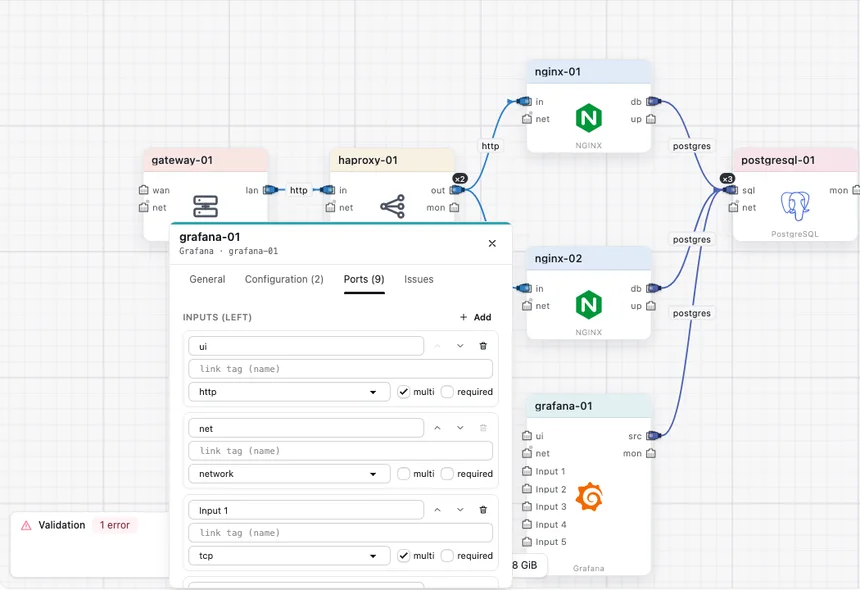
Drag modules onto a canvas and connect their typed ports. A link that cannot work is refused before anything is deployed, and a capacity check says whether the design fits your cluster.
Servers, health and every change in Fabric Console. Maintenance, joining servers and cluster settings show a preview before anything changes; every change is a job you can follow, retry or cancel.
Health is written in words, with the reason and the next step. Fabric restarts a module on another server only once it knows the first one has stopped.
Stopped first. A failed server is "fenced": proven stopped, so two servers never write the same disk.
Measured. A container with data ran again 144 to 155 seconds after its server was force-stopped, in three lab drills.
Virtual machines are not drilled yet. That is on the roadmap.
Illustration, not a screenshot and not a measurement: the animation is faster than a real recovery. In the lab, a container with data ran again 144 to 155 seconds after its server was force-stopped. Virtual machines are not drilled yet.
From drawing to running application.
Fabric owns the application: its design, connections, replicas and health. Incus, the open-source system that runs containers and virtual machines on a cluster, owns the servers. Fabric talks to Incus only through its documented API.
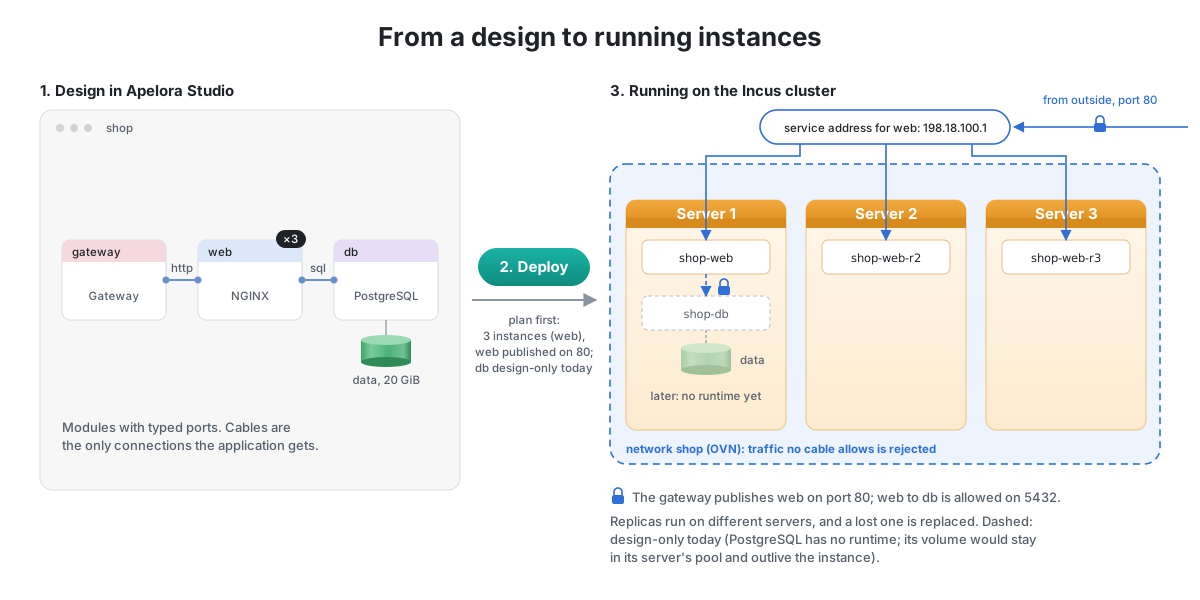
Design
Connect modules on a canvas in Studio.
Plan
See what would be created, resized or removed, and whether it fits.
Deploy
A worker creates the instances as durable jobs. A crash or a repeated request never makes duplicates.
Operate
Health, recovery, backups and the audit log run from the Console.
Illustration, not a screenshot: a design and the instances it becomes on three servers. Select it to open full size.
Start building in three steps.
The documentation takes you from nothing to a managed application, and is kept with the code.
Apelora Fabric is open source under the GNU Affero General Public License (AGPL). Services add people and time, not features: the software is the same for everyone.